
GLP-1 receptor agonists have rapidly reshaped the landscape of obesity and cardiometabolic care. What began as a pharmacologic breakthrough is now influencing healthcare delivery models, consumer behavior, and the broader wellness economy.
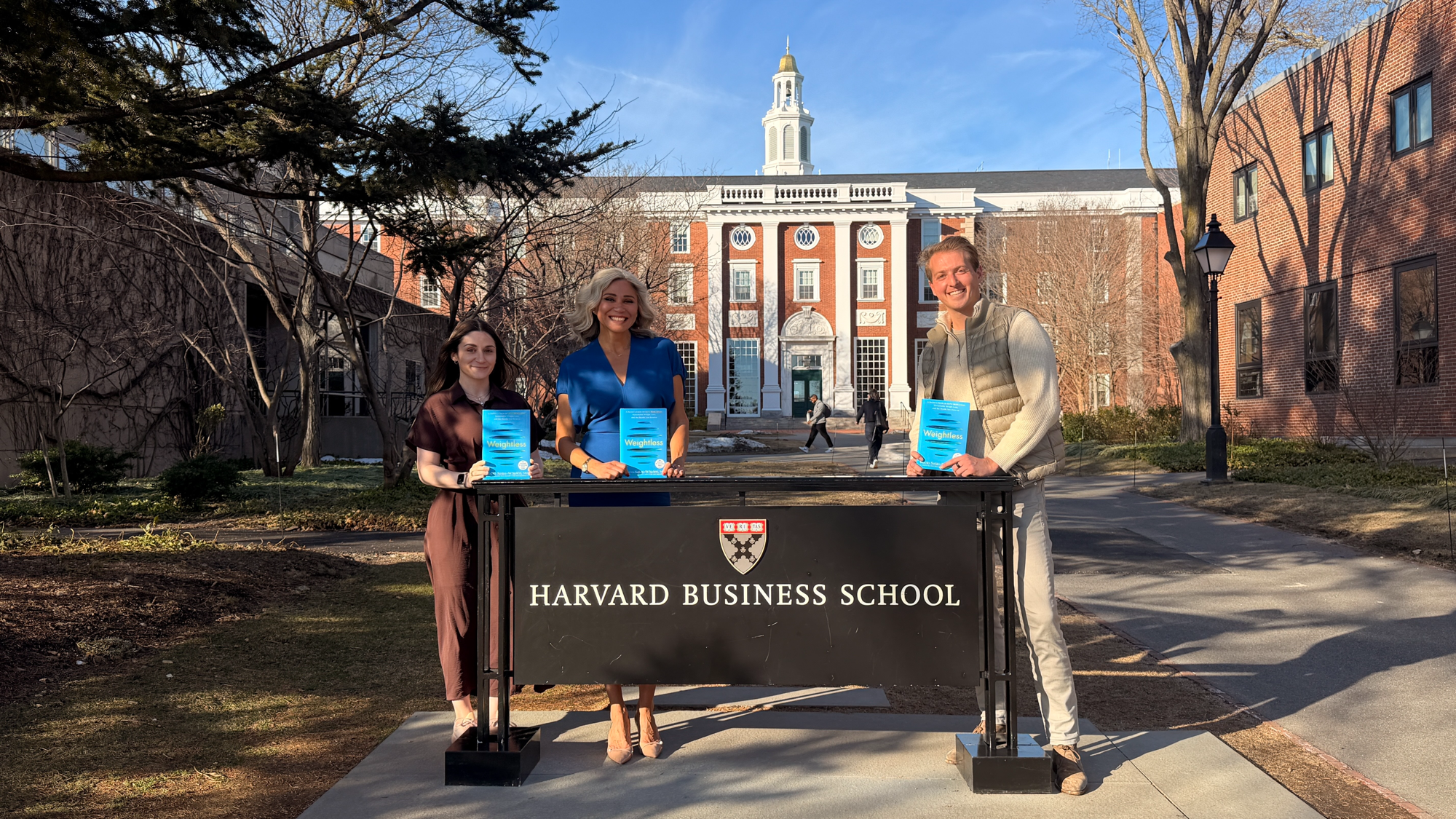
Alnu Health hosted "Beyond the Shot: The GLP-1 Revolution in Health, Business, and Consumer Behavior" panel at Harvard Business School to explore what comes next in the GLP-1 era. The conversation, moderated by Jesse Kesner, Co-Founder and CEO of Alnu Health and Harvard Business School MBA Candidate, brought together perspectives from obesity medicine, endocrinology, medical nutrition therapy, and healthcare innovation.
On the panel was board certified endocrinologist and obesity medicine specialist, Dr. Rocio Salas-Whalen. She is the Founder of New York Endocrinology and StrengthMD as well as the national bestselling author of Weightless: A Doctor's Guide to GLP-1 Medications, Sustainable Weight Loss, and the Health You Deserve. Dr. Salas-Whalen has built an impressive social media platform for educating patients and the public on evidence-based GLP-1 care and debunking medical misinformation.
Alnu Health's Founding Dietitian, Julia Lloyd, MPH, RD, LDN, CDCES, was also a panelist. She has trained the first clinically backed AI companion for supporting GLP-1 patients. As a diabetes care and education specialist, Julia is among the first dietitians in the country specializing in GLP-1 patient care. Prior to counseling patients prescribed GLP-1s at Mass General Hospital Concierge Medicine and Executive Health practices, she was the Senior Dietitian in Medical Weight Management at Brigham and Women's Hospital's Center for Weight Management and Wellness.
Why This Moment Matters for Healthcare
GLP-1 medications have quickly moved from niche metabolic therapy to one of the most consequential developments in modern chronic disease management. Their rapid adoption is reshaping not only clinical treatment pathways, but also healthcare delivery models, patient expectations, and consumer behavior.
For clinicians and healthcare leaders, the central question is no longer whether GLP-1s are effective. Increasing evidence suggests they are an important tool in managing obesity, diabetes, and cardiometabolic disease. The more urgent challenge is how healthcare systems will support patients using these therapies at scale.
During the panel, several themes emerged across clinical practice, public health, and emerging consumer trends that point to the next phase of obesity care; one defined not only by pharmacologic innovation, but by the infrastructure required to translate those advances into durable health outcomes.
The GLP-1 Opportunity: Addressing a Global Chronic Disease Burden
Obesity remains one of the most prevalent and undertreated chronic diseases globally. Current estimates from the World Obesity Federation suggest that more than 1 billion people worldwide are living with obesity, with projections suggesting this number could reach 4 billion by 2035.
The arrival of GLP-1-based therapies has significantly expanded the clinical toolkit available to address this burden. Historically, these medications have been prescribed primarily for type 2 diabetes, obesity meeting BMI criteria, and patients with cardiometabolic and weight-related risk factors. However, clinicians anticipate GLP-1 therapies will be used more broadly across cardiometabolic disease, metabolic dysfunction, and related comorbidities as evidence continues evolving.
The panel emphasized while these medications represent a major advancement, pharmacotherapy alone cannot address the scale or complexity of obesity as a chronic disease.
Obesity is a Chronic Disease, Yet Stigma Still Shapes Care
Despite the growing scientific consensus, obesity continues to be misunderstood in both healthcare and society. The American Medical Association formally recognized obesity as a chronic disease in 2013, a relatively recent update in medical classification, yet stigma remains pervasive in healthcare settings. Recent findings from the 2026 NIH Research Obesity Task Force symposium presented during the panel highlighted that 31% of healthcare professionals reported preferring not to treat patients with obesity.
These attitudes have measurable consequences as it is well-reported that weight stigma is associated with:
- Reduced trust in clinicians
- Delayed or avoided healthcare visits
- Increased psychological stress
- Higher rates of disordered eating, anxiety, and depression
Importantly, patients who experience weight bias are less likely to engage in preventive care and more likely to disengage from treatment. Advancing pharmacotherapy must be accompanied by continued efforts to reduce stigma and reinforce obesity as a biologically complex chronic disease.
GLP-1 Therapy is Most Effective with Longitudinal Care
Another major theme from the discussion was that GLP-1 medications require structured support systems to achieve sustainable health outcomes. Patients frequently experience GI side effects, rapid appetite changes, have nuanced nutrient needs that need personalization, and may feel uncertainty around lifestyle adjustments.
Managing these challenges often requires multidisciplinary care, including physicians, registered dietitians, and behavioral support. However, current care infrastructure struggles to meet this demand. Dr. Salas-Whalen reported there is roughly 1 board-certified obesity medicine physician for every ~9,000 patients, highlighting a significant capacity gap.
Traditional models, such as occasional clinic visits or group sessions, often lack the continuity needed to support patients through medication titration, lifestyle adaptation, and long-term maintenance. As a result, scalable support systems that extend care between appointments are increasingly viewed as a necessary component of GLP-1 treatment programs.
The GLP-1 Economy: Shifting Consumer Behavior
The panel also explored how GLP-1 therapies influence consumer markets beyond healthcare. Early evidence suggests that patients taking GLP-1 medications may change spending patterns across several categories, including dining out, grocery purchases, alcohol consumption, fitness, and wellness services.
Clinicians are also observing a change in how patients think about body composition, muscle preservation, and metabolic health, rather than weight loss alone. We are entering a new phase of cardiometabolic health management, where pharmacologic treatment requires integration with clinical exercise physiologists, registered dietitians, and psychology/psychiatry care.
While these trends are still developing, they may reshape sectors ranging from consumer goods to preventive healthcare services. With rapid public awareness has also come a surge in questionable products and marketing claims. An example is the rise of supplements marketed as "GLP-1 boosting" or "GLP-1 stimulating".
Lloyd emphasized there is no evidence that over-the-counter supplements can meaningfully replicate the pharmacologic effects of GLP-1 medications and does not recommend them. While certain ingredients, such as berberine, are frequently included in these products, current evidence does not support therapeutic benefit comparable to GLP-1 receptor agonists.
Physiologically, GLP-1 is naturally secreted in response to food intake but is rapidly degraded in the body within a few minutes, which is why GLP-1 medications are engineered to have longer duration of action. For clinicians and patients alike, the key message is that evidence-based pharmacotherapy remains distinct from the growing supplement market targeting GLP-1 consumers.
Social Media Is Transforming Awareness and Risk
The panel concluded with a discussion on the role of social media in the GLP-1 landscape. Platforms like TikTok and Instagram have dramatically accelerated awareness of these medications. High-profile endorsements and viral content have brought obesity pharmacotherapy into mainstream conversation. However, this rapid visibility has also created challenges:
- Oversimplification of complex medical treatments
- Online pharmacies offering medications with minimal clinical oversight
- Patients relying on influencers rather than clinicians for guidance
Many patients now turn to online communities for support after starting GLP-1 therapy, highlighting a broader gap in structured clinical follow-up. The panel emphasized that as awareness grows, healthcare leaders will need to balance expanded access with appropriate medical oversight and patient education.
“As a physician dedicated to transforming how we approach obesity, metabolism, and long-term health, my experience with the Alnu team at Harvard was incredibly meaningful. Their vision and scientific rigor strongly align with the work I’m doing through Weightless; bringing personalized, evidence-based care to the forefront.”
— Dr. Rocio Salas-Whalen
Looking Ahead: The Future of GLP-1 Care
The GLP-1 era is more than a new class of medications; it’s catalyzing broader changes across clinical obesity treatment, healthcare delivery infrastructure, consumer health behavior, and digital health innovation. However, one principle remained consistent throughout the discussion: medication alone is not the full solution.
Sustainable outcomes depend on longitudinal care models that integrate pharmacotherapy with medical nutrition therapy, behavioral support, and ongoing clinical guidance. As the field continues to evolve, the healthcare systems and technologies that enable continuity of care will likely play a defining role in the next chapter of obesity medicine.
Key Takeaways
- GLP-1 therapies are reshaping clinical care and healthcare delivery, not just prescribing patterns.
- Obesity must be treated as a chronic disease, and reducing stigma is essential to improving engagement and outcomes.
- Sustainable GLP-1 outcomes require multidisciplinary, longitudinal support beyond episodic clinic visits.
- Consumer behavior is shifting rapidly, but evidence-based care remains distinct from supplement marketing claims.
- Social media can improve awareness, but safe scale depends on clinical oversight and patient education.